
Lauderdale County Criminal Court Cases
Lauderdale County divides criminal court records by jurisdiction. Circuit/Criminal Court keeps felony files and appeals. General Sessions handles misdemeanors, warrants, initial appearances, and felony preliminary proceedings. A city court in Ripley, Halls, or Henning keeps its own ordinance or traffic docket. The Tennessee court directory identifies the Lauderdale trial courts at the Justice Complex. A case seeker should name both the court level and the type of charge when contacting the clerk.
Circuit Court Clerk Jodie Edwards is the recordkeeper for the main criminal dockets. The County Clerk at Court Square and the Clerk and Master for Chancery matters are different offices. Neither should be treated as a general substitute for the criminal clerk. This local split matters because a person's name, a rough date, and the word “court” may not be enough to identify the right Lauderdale County case file.
Lauderdale Criminal Courts Compared
The quickest way to avoid a failed request is to match the alleged conduct to the court that handled it. These Lauderdale County channels serve different record sets, even though several county offices share one site.
| Court or office | Main record role | Contact |
|---|---|---|
| Circuit/Criminal Court Clerk | Felony files, criminal dockets, judgments, and appeals | 675 Highway 51 South, Ripley; 731-635-0101 |
| General Sessions Court | Misdemeanors, warrants, initial proceedings, and preliminary hearings | 675 Highway 51 South, Ripley; 731-635-2572 |
| Ripley City Court | Ordinance and traffic matters | 731-635-5223; confirm 110 or 114 South Washington before visiting |
| Halls municipal records | Local ordinance docket; current clerk should be confirmed | 208 North Church Street; 731-836-9653 |
| Henning municipal records | Local ordinance docket; current process should be confirmed | 260 North Main Street; 731-738-2997 |
Municipal jurisdiction is narrow. Tennessee municipal courts generally hear ordinance matters, often traffic or code cases, rather than Lauderdale County felony prosecutions. If a city ticket led to a separate state charge, request the city docket and the county docket as two records. Henning's official-hosted code lists useful docket terms, but its 1987 update date means current procedure must be confirmed with Town Hall.
Searching Lauderdale County Case Records
No official public Lauderdale County trial-case portal was verified. Start with the clerk and describe one identifiable record. A clear request saves the staff from guessing which court, year, or file is meant. Ask about inspection, an ordinary copy, a certified copy, or one filing before sending payment because Lauderdale County has not published a current criminal search or copy tariff.
- Choose Circuit/Criminal, General Sessions, or the city court based on the charge and stage.
- Give the name used in court, an approximate filing or arrest year, and the charge if known.
- Add the case or docket number and ask whether the file is active or archived.
- Specify the exact item needed, such as the docket, indictment, judgment, sentence, or linked warrant.
- Confirm the current fee, payment method, certification option, and delivery method with that clerk.
| Request field | Format | Required | Why it helps |
|---|---|---|---|
| Name as filed | Full name | Yes | Matches the caption or party index |
| Court level | Circuit, Sessions, or city | Yes | Routes the request to the right docket |
| Case or docket number | Clerk-assigned number | No | Usually gives the most precise match |
| Filing or arrest year | Approximate year | No | Narrows active and archived files |
| Document wanted | Inspection, copy, or certified copy | Yes | Distinguishes a disposition from the full file |
Lauderdale Trial Docket Portal Limits
Tennessee does not offer one public statewide search for trial dockets. The AOC Public Case History covers appellate courts only. It will not find a new Lauderdale County General Sessions or Circuit case simply because a person was arrested locally. Its coverage begins when an appellate record was filed after September 1, 2006, and it is updated through the prior business day.
That distinction is easy to miss. Search the local clerk first for trial events. Use Public Case History only after an appeal reaches the Court of Criminal Appeals, Supreme Court, or another covered appellate court. Available appellate searches include case-number sequence, part of the case style, party first and last name, or organization. Some motions, orders, judgments, and opinions filed after August 26, 2013 are linked as PDFs.
The state's public-records FAQ illustrates the access framework behind a focused request.
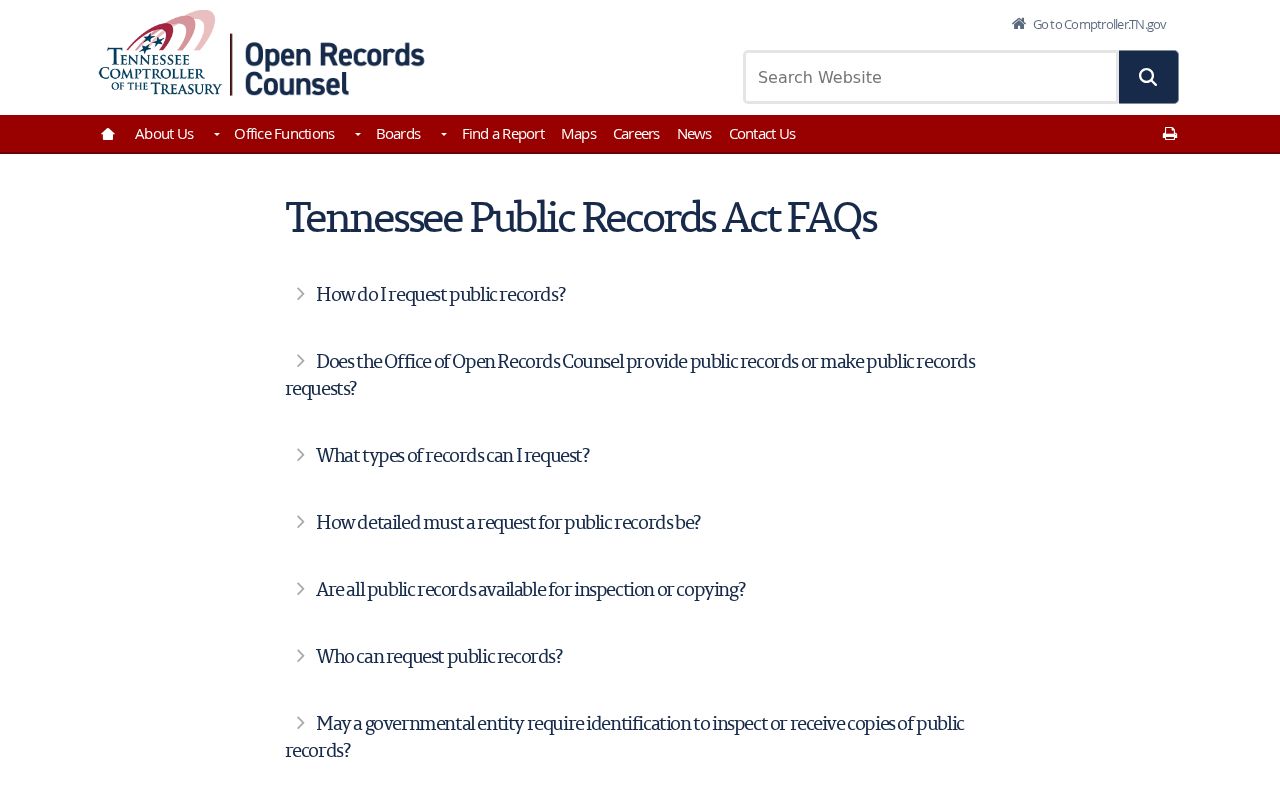
The source helps explain why an identifiable existing record is a sounder request than asking a clerk to create a new case summary.
Inside a Lauderdale County Case File
A Lauderdale County criminal case file documents what the state actually prosecuted and how the court resolved it. This differs from an officer's arrest report or the jail's intake record. No local public detail page was available for a safe field-by-field inspection, so the entries below are categories to request and verify with the clerk, not a claim about an online display.
| Case Number and Court | Identifies the docket and the court with jurisdiction. |
|---|---|
| Charging Document | May be a complaint, information, indictment, or other filed accusation. |
| Docket Entries | Chronological filings, settings, appearances, motions, and orders. |
| Hearing Dates | Scheduled or completed court events and related entries. |
| Disposition and Judgment | Shows dismissal, acquittal, conviction, plea, or another recorded outcome. |
| Sentence and Costs | Records the court's sentence, conditions, fines, costs, and related status where public. |
| Linked Warrant | May identify a warrant or capias tied to the case; live status requires official confirmation. |
Lauderdale Case Disposition Terms
A docket result should be read charge by charge. One count may end differently from another, and the booking label can differ from the prosecutor's filed charge. These plain terms help frame a request for the final judgment.
- Nolle prosequi
- The prosecutor elects not to continue a charge.
- Dismissal
- The charge ends without a conviction.
- Acquittal
- The court or jury enters a not-guilty result.
- Conviction
- A judgment of guilt follows a plea or adjudication.
- Diversion
- A qualifying case is deferred under statutory conditions rather than resolved as an ordinary conviction at that stage.
Note: Ask for the disposition and judgment because an indictment identifies a charge but does not reveal the final result.
How a Criminal Case Moves
A Lauderdale felony can start in General Sessions and move only after a preliminary hearing and grand-jury action. An indictment then places the prosecution in Circuit/Criminal Court for arraignment, pretrial work, a plea or trial, disposition, and sentencing. A misdemeanor may remain in General Sessions. A true municipal ordinance case stays with the city court unless an appeal or separate state charge changes the path.
Case flow: Charges Filed › Arraignment › Pretrial › Plea or Trial › Disposition › Sentencing
The file grows at each step. A warrant return or complaint is not a judgment. Pretrial motions do not decide guilt by themselves. The disposition and sentence are the key closing records, while a later appeal creates a separate appellate trail.
Lauderdale Court Record Chain
The Justice Complex brings the criminal clerk, courts, district attorney, public-defense contacts, and sheriff into one Lauderdale County location, but each office still creates or keeps a different record. The sheriff holds agency and custody records. The District Attorney prosecutes and receives some diversion or expungement notices, yet is not the neutral archive for the complete court file. The clerk maintains the docket, filings, judgment, and sentence.
A local event can also move outside the state trial system. An Associated Press report on multi-county charges shows why allegations, filed charges, and final outcomes must remain distinct.
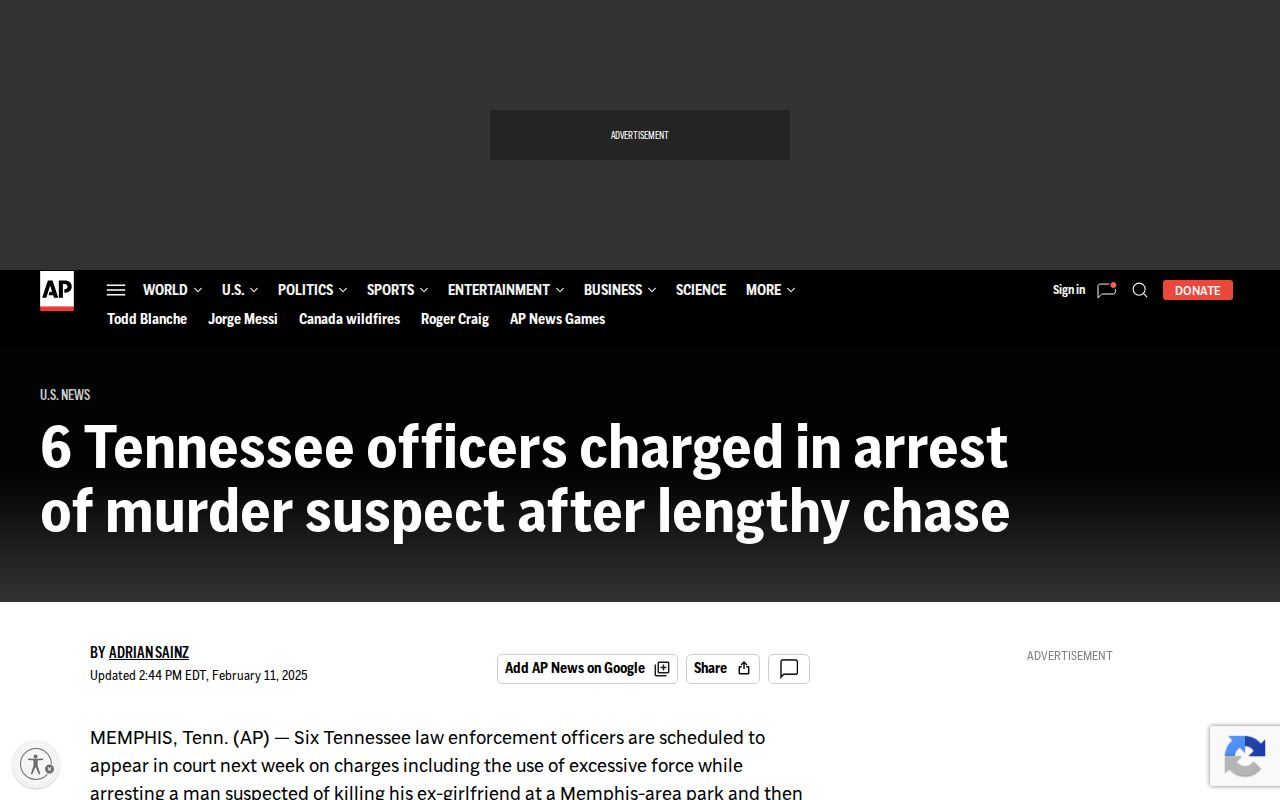
The image is source context only; the clerk's docket remains the place to verify each charge and its present status.
Lauderdale Criminal Case Appeals
An appeal adds a new record layer rather than replacing the local file. The Circuit/Criminal Court clerk remains the source for the Lauderdale County trial docket, exhibits subject to access rules, judgment, and sentence. Once the appeal is filed, AOC Public Case History can show the appellate case style, status, events, and available documents within its stated date coverage.
Custody after sentencing is another separate layer. TDOC's FOIL help page explains public correctional status terms, not trial-court proof.
A FOIL entry can help locate a sentenced felony offender, while the Lauderdale judgment supplies the court's authoritative case outcome.
Missing Lauderdale Case Outcomes
If a case cannot be found, recheck spelling, aliases, court level, and year. Ask whether older paper records must be retrieved. Also confirm that the event produced a filed charge. An arrest report can exist without a resulting case, while a case may sit in a municipal or General Sessions docket rather than Circuit Court.
A missing disposition in a Tennessee Bureau of Investigation history calls for a two-part check. Obtain a certified disposition or order from the originating Lauderdale County clerk, then follow TBI's correction instructions. TBI uses fingerprints for identity disputes. A clerk error must first be addressed with that clerk. Keep certified copies of any expungement order because courts, TBI, and other custodians may update on different schedules.
Case Record Access & Restrictions
Tennessee Supreme Court Rule 34 sets the public-access framework for court records and protected data. The Tennessee Public Records Act also supports access to existing open records for Tennessee citizens, subject to exceptions. It does not force a custodian to create a new compilation. Ask for a known file, date range, or document type.
Juvenile files, sealed matters, protected victim information, sensitive identifiers, grand-jury material, and some active investigative content may be restricted or redacted. An online absence is not proof that no case exists. Contact the proper Lauderdale County clerk and ask whether access is limited, the file is archived, or the case belongs in another court. For a qualifying expungement, start with the court that handled the charge and verify the current form, eligibility path, and fee.